 Packaging & Shipping
 Sandstone
 Italian Marble
Sandstone remains one of the most specified natural stones for architectural and landscape projects because it balances workability, visual warmth, and long-term outdoor performance. It has been used in construction for centuries and continues to be selected for both contemporary and classical design programs.
Geologically, sandstone is a clastic sedimentary rock composed mainly of sand-sized particles in the range of 0.0625 to 2 mm, commonly dominated by quartz and feldspar. This granular structure contributes to its natural texture and broad finish adaptability.
Why Sandstone Still Leads in Project Specification
For architects and procurement teams, sandstone offers strong visual continuity across paving, walling, and cladding programs while allowing practical finish control for grip, maintenance, and installation efficiency.

Key Specification Insights
Excellent Outdoor Character
Natural texture and tonal variation make sandstone highly suitable for facades, paving, and landscape transitions.
Broad Finish Flexibility
Split, brushed, and honed surfaces allow designers to control both tactile performance and visual intent.
Design-Friendly Processing
Sandstone is comparatively easy to cut and shape, supporting custom sizes, edge detailing, and pattern layouts.
Context-Rich Visual Language
Works equally well in rustic, heritage, and modern-minimal projects with careful shade and finish pairing.
Lifecycle Value
With proper selection and installation, sandstone performs for decades in exterior and high-traffic landscapes.
Procurement Scalability
Compatible with both bespoke villa requirements and large volume hospitality/commercial project execution.
Application Matrix
| Use Zone | Recommended Approach | Primary Benefit |
|---|---|---|
| Exterior Facades | Calibrated cladding pieces with controlled joint planning | Timeless look with strong weathered character |
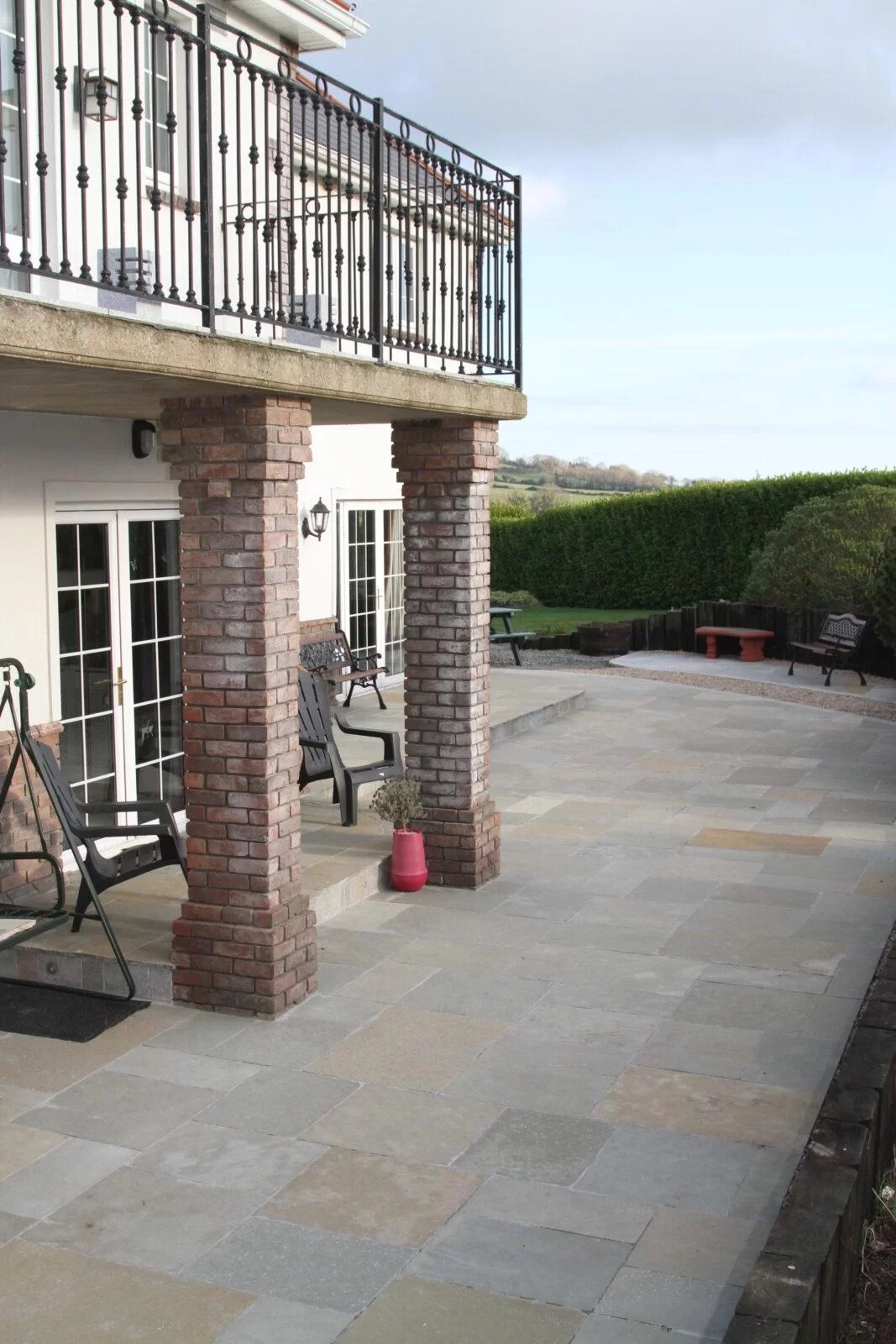
| Patios and Garden Paving | Textured/split finish with slope-aware installation | Grip support and natural warmth |
| Pathways and Courtyards | Mixed format laying patterns | Visual rhythm and movement guidance |
| Boundary Walls and Features | Rustic split or dressed block combinations | Depth, shadow-line definition, premium curb impact |
| Hospitality Landscapes | Shade and finish consistency planning by zone | Scalable aesthetics and easier maintenance planning |
Technical Snapshot
| Parameter | Typical Information | Why It Matters |
|---|---|---|
| Rock Type | Clastic sedimentary rock | Defines texture behavior and finish response |
| Grain Size Range | 0.0625-2 mm (sand-sized grains) | Influences visible texture and tactile character |
| Common Minerals | Mostly quartz and feldspar | Contributes to durability and color diversity |
| Color Families | Tan, buff, yellow, red, grey and mixed tones | Supports broad architectural palette matching |
| Best-Practice Maintenance | Periodic cleaning and seal plan by exposure zone | Improves stain resistance and surface longevity |
Project Gallery
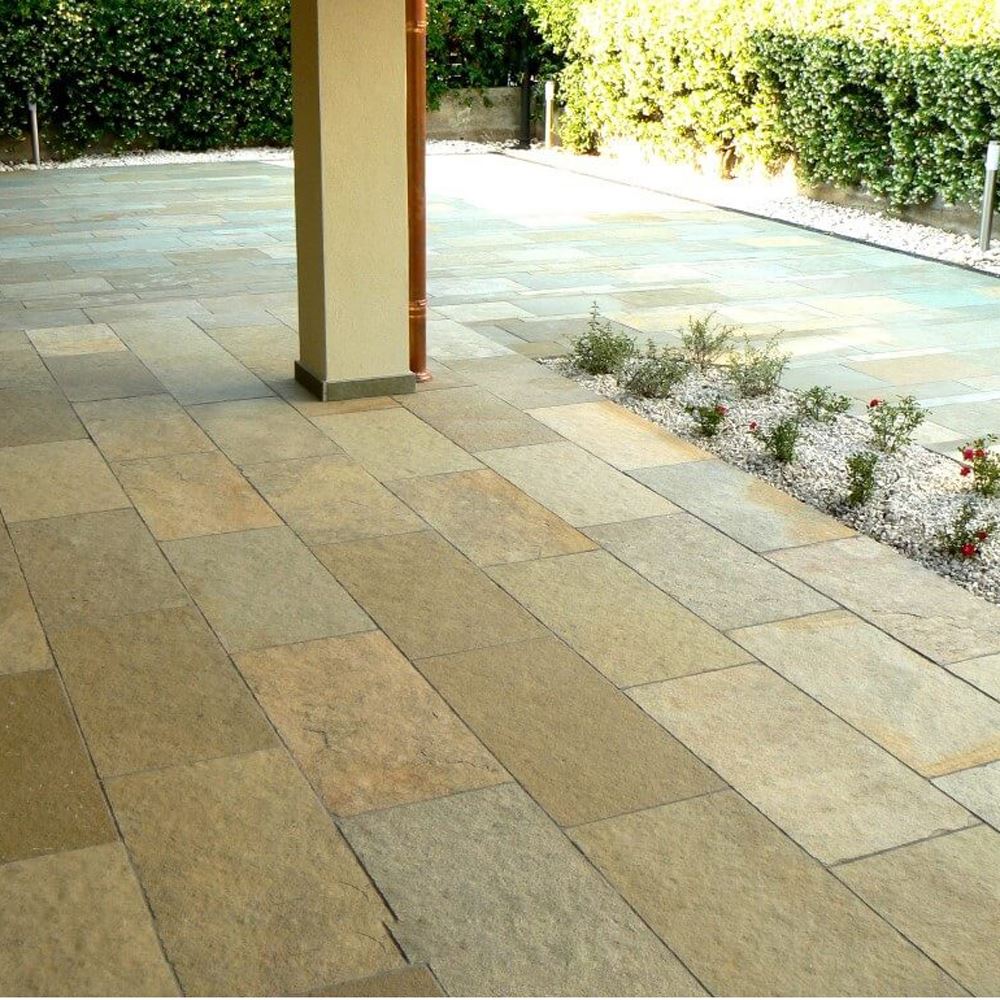
Sandstone used as a visual anchor in high-value exterior architecture.
Close texture profile showing grain and finish quality for specification reviews.
Frequently Asked Questions
Yes. Sandstone is widely used in both interior and exterior applications. Selection of finish, thickness, and installation system should match the use zone and climate exposure.
Review finish type, calibrated thickness range, intended installation method, shade blending strategy, and packaging format for transport and site handling.
In most practical projects, sealing is recommended by exposure condition. Seal plans are especially useful in high-traffic, food-contact, or moisture-prone zones.
Blend pieces from multiple boxes/pallets during installation. This distributes natural variation evenly and avoids clustered tonal bands.
Absolutely. Sandstone pairs effectively with wood, metal, concrete, and porcelain for layered contemporary as well as traditional design language.
With correct installation and maintenance, sandstone commonly performs for decades and often improves visually with age in exterior applications.
Planning a Sandstone Package for Your Next Project?
We support design and procurement teams with finish mapping, quantity planning, packing optimization, and export-ready documentation.
Quick Product Summary
| Feature | Details |
|---|---|
| Material | Natural Sandstone |
| Geological Class | Clastic sedimentary rock |
| Grain Range | 0.0625-2 mm |
| Typical Composition | Mainly quartz and feldspar |
| Primary Use Zones | Facades, paving, pathways, landscape features |
| Finish Strategy | Select by aesthetics + grip requirement + maintenance plan |